

This is 40
An interview with 'On Becoming's Beth Risley about turning 40 and creating herself.

Join us for a Seriasly Pick Up PICNIC in Highbury Fields on May 2nd at 5PM. Who knows, maybe you’ll get a chance to shoot your shot with Highbury Fields’ unofficial mascot: Paul Mescal.

Join the *sparkly, new* Seriasly WhatsApp community for more details (including rain plans because…London).
By now, we all know the fate of the “eldest daughter.” Until that trope proliferated the internet, I didn’t give much thought to my birth order, as it wasn’t something I could change. But every once in a while, I felt envious of my younger sisters, or my friends who had older siblings. It seemed like a gift to have someone up a little ways ahead of you on the path, someone you could look towards (whether you agree with their choices or not) to help yourself course correct. As I navigate my thirties, that feeling that I could use an older sister is getting stronger.
And then, earlier this year, a friend I met ten years ago in LA in another life began a Substack that filled that void so perfectly, it was like I’d willed it into existence.
Beth Risley and I met when we were both working at Violet Grey. She was 30 and I was 23 and I couldn’t believe how graceful and kind and elegant she was (I still can’t). We stayed in touch over the years the way people do these days — a few Instagram messages here and there — but in January, Beth began posting beautiful personal essays every week on her new Substack, On Becoming. These small windows into her life on the eve of her 40th birthday were exactly the peek down the road that I’d been searching for.
So, I called Beth up a few weeks after her birthday and we spoke for over an hour about turning 40 and the journey she took to getting there. Proceed with caution: this interview will make you very excited about getting older and milestone birthdays.
Be sure to subscribe to On Becoming for more of Beth’s serene wisdom.
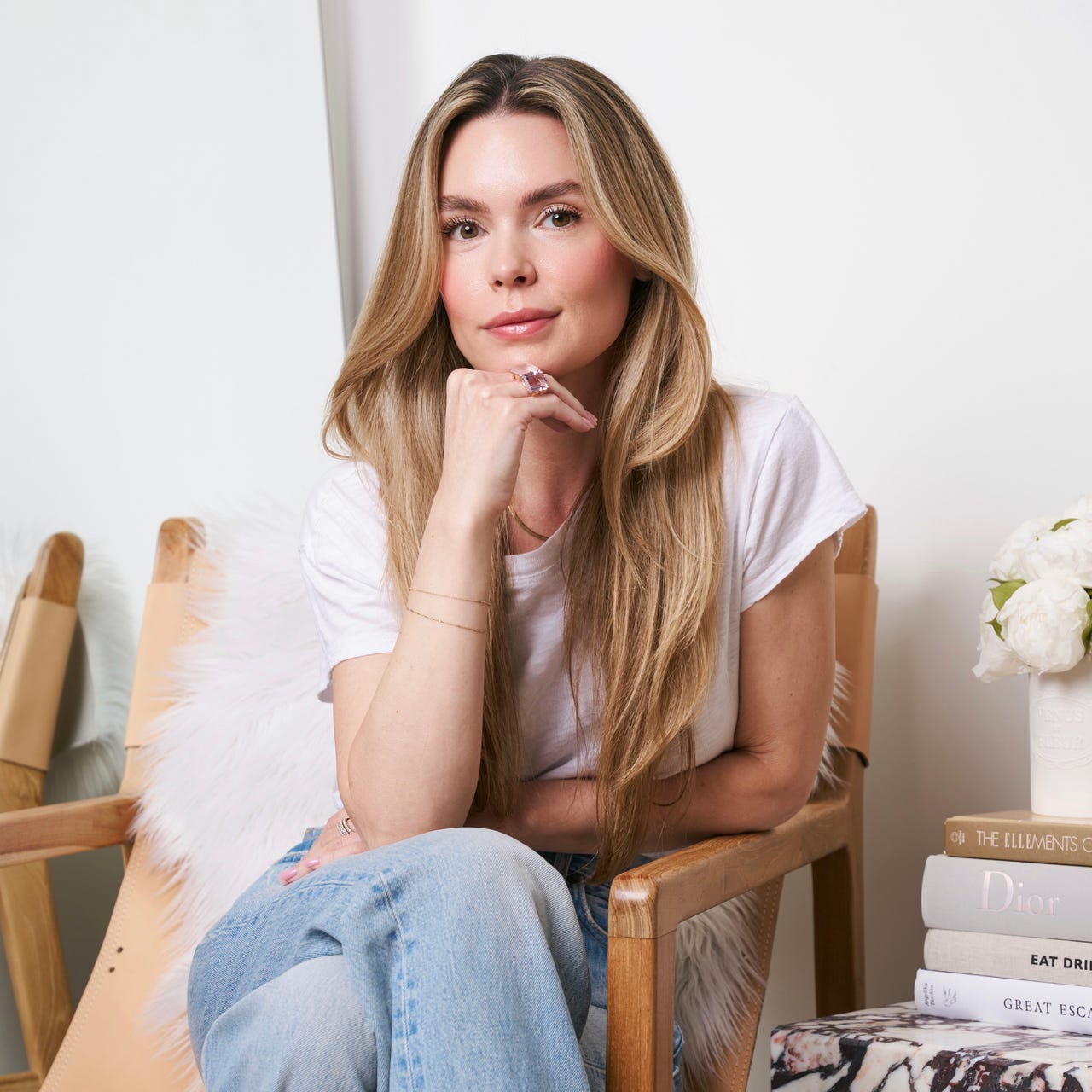
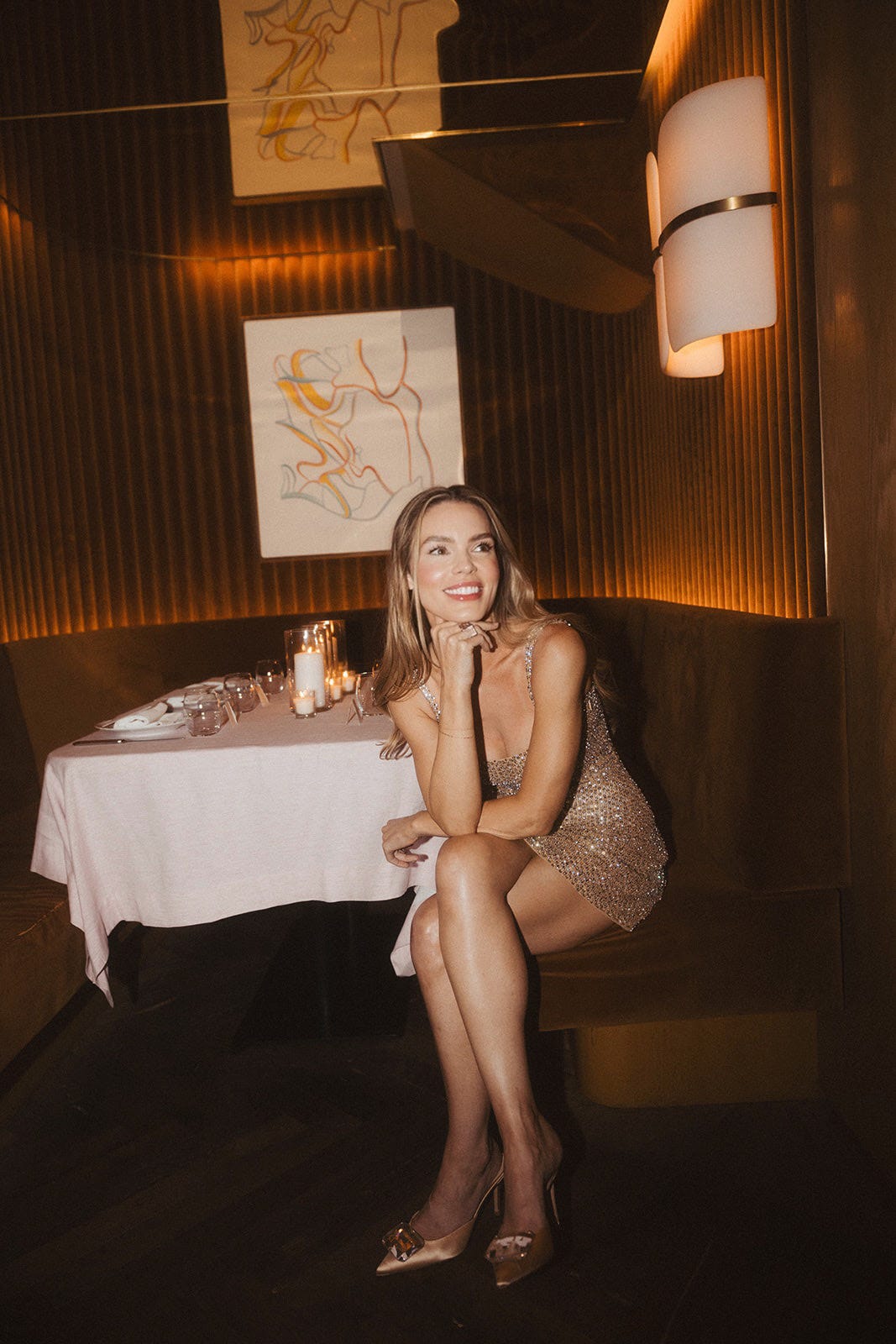
Alison: You just turned 40 at the end of February, happy birthday! How would you summarize your thirties? From a bird’s eye perspective?
Beth: I entered 30 feeling completely behind in life, as a married woman. And I spent my early thirties feeling like life had ended in some grand way: that I could no longer be a mom, that my career might never be what I wanted it to be, that I was stuck in a life that I wasn’t myself in and wasn’t happy in. 35 was a very transformational year for me because I made the courageous decision to walk away from my marriage and start over.
The last five years of my thirties were tremendous. I was healing and understanding where I wanted to go and the life that I wanted to create after 35. So, the first half of my thirties was feeling stuck. The second half of my thirties was feeling free. And then rebuilding…not even just rebuilding, but creating a life. I don’t think we find ourselves. I actually think we create ourselves.
When you say you felt behind at 30, you tacked onto that “as a married woman”, was that inextricable from that feeling or was it two separate things?
I felt behind because I wasn’t a mom. I remember at 31, I had the flu and I missed my period. It was a month late and I had never had an irregular cycle before that, so I thought I was pregnant. But I kept testing and I wasn’t. And I remember thinking, ‘it has to happen now. If it doesn’t happen now, it’s not happening. I’m already late to the game.’
Was that a product of who you were surrounded by? Or where you came from?
Well, I think it’s both a product of my friends and my culture. But I do feel that we go through a period between 28 and 33 when it feels loud, where our biology is really telling us we need to have a baby. It doesn’t mean we can’t have children after it. But I do remember feeling this innate pull that this needed to happen and soon. And if it didn’t, forget it.
I still felt the pull after 35, but it actually completely dissolved at 37, when I froze my eggs. I wanted kids, but it wasn’t really a possibility in my marriage because we weren’t on the same page. So, after my divorce, I thought, ‘this is my time to reclaim not only myself, but my dreams and the dream of becoming a mom that had not come to fruition.’ And I didn’t have a partner, so I thought I’d freeze my eggs to make sure that at least I’d given it my best effort. And I felt another pull happen during those couple years between 35 and 37 where I was looking for a partner to have a baby with. That was my main goal.
The day I froze my eggs was…the only way to describe it is: I remember seeing the fluorescent lights above me and having a holy moment on that table, like, ‘You are here, you made it. You got out of the thing you need to get out of to be here. You are reclaiming your life and yourself. And you’re giving it your best shot.’ And I can’t explain it, but I have not once thought about a child since. And I don’t mean that in the way that I don’t want one, but I haven’t had any pressure. And it’s not because it’s an insurance policy in any way. I just made peace with the unknown. I would love to potentially be a mom, and it will be a gift if it happens, but I’m not attached to that outcome. I’m not attached to that being my story. I think what it boils down to is I got to reclaim some control of my life.
Your observations of this primal desire are very helpful for me to hear, because I’m in that window that you were talking about, 30-33, and this strong pull of, ‘okay, come on, it’s got to be now.’ So, it’s really good to consider that there might be these peaks and troughs to that desire and to pay attention to that. I would be so curious if I met other women who have not had kids until later, or just haven’t had kids, to hear if they also had those similar feelings that ebb and flow like that. It’s fascinating to wonder how much of our desires are in our brain as a social contract or something we really want and how much of it is a chemical reaction.
It’s probably half and half, or some percentage of both primal and cultural. But I also think I was seeking a way out of my life that I was in and thought that a baby could help that, a baby could give me purpose and a life I love. I was thinking about it the wrong way and I just hadn’t understood that yet.
You were saying that it was almost like a dream that you released. Now, looking back, do you feel like that dream was truly yours, or do you feel like it was maybe actually not your dream, and that’s why you were able to release it?
I have questioned this a lot in the past few years. I do think it was a real dream. I think it still remains a dream. My earliest memory is holding a baby and wanting to be a mom. I was a baby holding a baby. My baby dolls were my world and I loved nurturing them and taking care of them. That was my true dream, but I think everything else built around that maybe wasn’t my dream. I had a dream of having five kids, which is really a way of saying, ‘I want a full life and a full house and community.’
I think it’s all about attachment. I live by a quote that’s, ‘100% committed and 0% attached.’ I really do try to give it my all, whether it’s a career, whether it’s a partner, I’m committed to it. But I’ve learned that you can’t be so attached to something that if you lose it, you crumble, or else life is pretty miserable, and I refuse to live in the misery of life.
What are some dreams that maybe came back to your life or that you formed anew in this phase after your divorce or just at any point during your thirties?
I really didn’t have other dreams. What I was able to do is build the version of me that I didn’t know could exist. I had no idea how much was waiting for me: that I could create a beautiful community of friendships that are so abundant, that I could have a career I love. I feel like becoming a dog mom was not my dream. I guess I just made room for the life I have today. I didn’t dream this, but it’s so right in so many ways.
How did you go about building all of that?
I think it is all about mindset, even though that is an overused, annoying term in many ways. But I believe it because I’ve experienced it. I remember writing in my journal on my 37th birthday saying, ‘I’m too late, I’ve aged out of everything.’ It had been two years since I separated, my divorce was still being finalized, which was a very long process. I was very ‘woe is me.’ And something about that was the catalyst for me to say, ‘let’s take control of your life. Let’s no longer think all of these negative thoughts.’
So, I started gratitude journaling: what I am grateful for? What do I see in front of me? And sometimes it was as simple as the birds chirping outside. And that started helping me look for the good in my life. And when I started to talk positively, I started to build habits that supported that. I took responsibility for my life and my actions. And then one day, I realized that I no longer associated with that negative, victimized mindset. I started asking myself, ‘who do I want to be?’
And how did it feel to be asking yourself that question of ‘who do I want to be?’ You started gratitude journaling around 37, compare that to maybe 27 or like just any point in your 20s because I feel like there would be such a difference in asking that question at those two stages.
I remember a very poignant moment when I was 27 and my best friends and I were at a beach house and we decided to do some goal setting for the next 5-10 years. They sat there and wrote down goals and wishes and dreams and I sat there and wrote nothing. I couldn’t write a dream down. I couldn’t write what I wanted for the next ten years. I couldn’t even envision it. I was scared of it. We all put them in wine bottles and put them out to sea. But my bottle was empty. It haunted me because I realized how sad it was that I didn’t have the courage to dream.
And what did it feel like to reclaim that and to finally start to dream and be able to envision that?
I guess I would say it felt freeing. But it didn’t come without a few years of really hard work to get there. That 37th birthday was kind of the pivotal moment, and I’d already been going through healing for the last two years, but that was the moment I said, ‘No, enough. I’m completely reclaiming this.’ The ultimate gift is to allow yourself to have agency and not wait on someone or something to save you.
After gratitude journaling, are there other tools that you also started to add to your toolbox that allowed you to build this life for yourself?
I think talk therapy is important. I do think that is a necessary evil, just getting thoughts out there, however that works for someone. And I think there’s something really powerful with breathwork as a healing modality. I don’t do it frequently, but the times that I’ve done it, I’ve had some pretty major unlocks. I also started writing what essentially would be a memoir that I likely will never publish because it’s just too exposing, but I did it for myself to get that out. I think some people process through talking, for me, it’s writing. That 37th year was all of that combined.
And then I asked myself: what am I waiting to begin or become? Playing tennis was something that I’d always wanted to do and I’d thought maybe if I have a partner one day we can play tennis together. And then I was like, ‘oh, I’m not waiting for a partner to do this hobby’ and started playing tennis. I found a love for Pilates and movement, which I hadn’t had before. I know I wasn’t taking care of myself overall. And I just started implementing little things and big things alike. I joined a private club, whereas most people would think it makes more sense to wait for a husband to do that. But for me, I wanted somewhere that I could go and I didn’t want to wait on that partner to be able to either fund it or go with me. That private club has become my second home and I would say the most life-giving thing I have in Santa Monica.
I think women definitely put so much on hold because it’s a dream that they’ll do with their other person, or because a lot of us are told that we need that other person to unlock that life experience. For example, you just adopted your dog, Goldie. And adopting a pet is something that a lot of people are told to wait until they have a partner to do in order to share responsibilities. So, I’m curious about your experience adopting a dog as a single person.
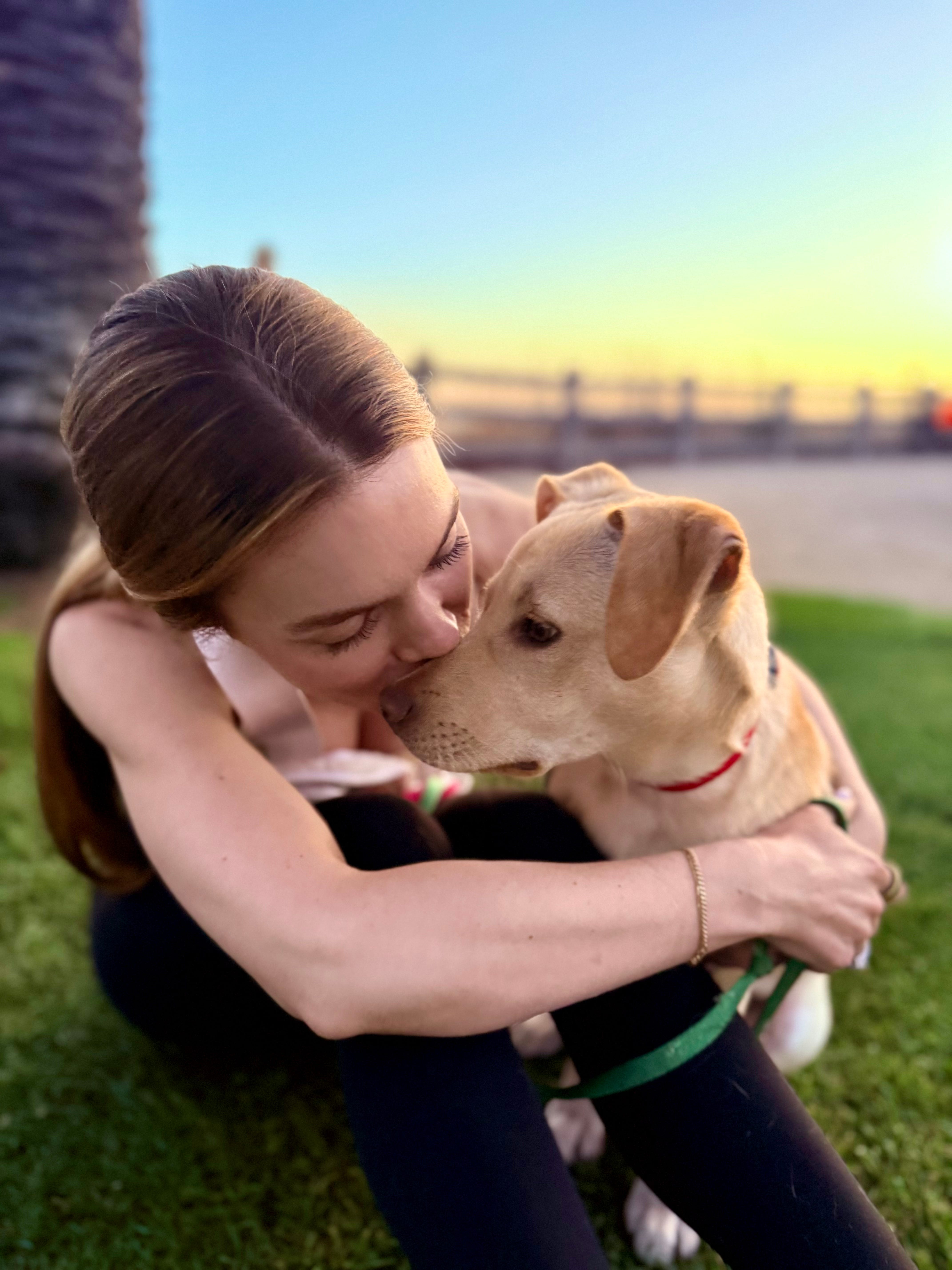
I won’t lie, it is a lot of responsibility. Before I adopted her, I had a friend say that if I got a dog I had to ‘staff up.’ It made me laugh, but what they really meant was that I needed to outsource where I can and build my village. And honestly, that was the best advice. Goldie goes to daycare twice a week. I drop her off at 9 AM and pick her up at 7 PM. I have my full day of work, I go to the gym. Those two days a week give me a sense of myself back and she loves going to daycare.
Your community grows because of a dog; I have dozens of friends now that are my dog friends from going on walks with her or from going to her dog park. It has given me a sense of community. It has given me a sense of purpose. It’s a bond that I can’t explain.
If you’re not getting a dog because you’re single (if you can afford it, because I think there are some real financial responsibilities at play)...you should not wait for someone else to give you permission. Goldie has been something I didn’t expect to desire, I didn’t know she would come my way, and it’s given me way more than I could ever even put into words. She’s really expanded my life in every direction.
You’ve talked about community a few times, and I’m curious, I think women specifically, struggle in our thirties to know how to be there for one another because the paths diverge more than in your twenties. How were your friends there for you and vice versa, throughout the period of your thirties, given that you experienced a lot of change?
Your thirties are the decade that shows you who your people are because there are times you go through when you need people to show up. And for me, divorce was a big one. You determine who are your lifetime friends that you might have known since high school, middle school, college, and then who are the seasonal ones, the people you lived in the same city with in your twenties, but who now have kids and are married and maybe you’ve fallen out of touch with. And that’s okay.
Accepting that friendships can fade, and it doesn’t mean that those people weren’t real and good friends is a lesson for your thirties. We have a hard time accepting that we’re no longer as close, and feeling like we did something wrong or feeling that the friendship wasn’t strong enough, and that’s just not the case.
I don’t believe we’re meant to carry fifty best friends for the rest of our life. I think we’re meant to carry a handful of best friends that go through every season with us, and then we have friends that come and go, depending on the proximity to each other, whether that’s through work, through your neighborhood, or a hobby. And we can also let those go when the circumstances change that don’t support the regular communication.
The other part of friendship that I really learned in my thirties was not expecting every friend to be the same. Knowing what each friend brings to you and how you connect to each other and letting that be enough. Not putting other expectations on them that they may not be able to fulfill. I experienced a lot of disappointment and resentment over friendships that were letting me down in different ways. But when I realized that was my own issue, that I was expecting them to be someone they are not, that was very freeing.
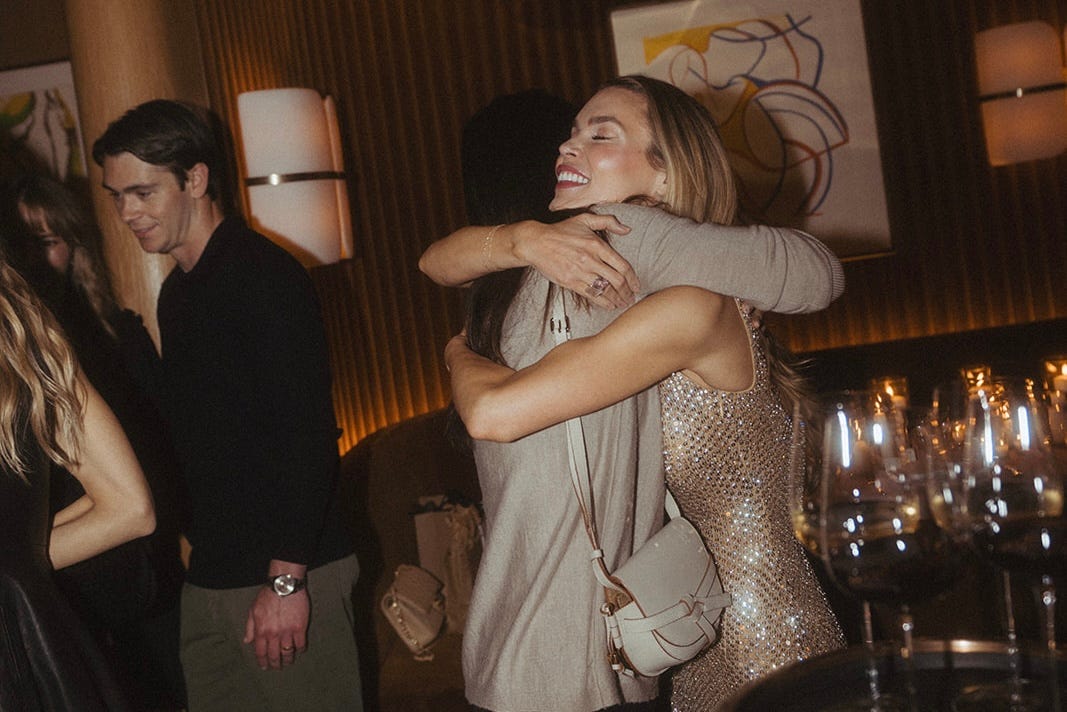
And you’ve just had your beautiful 40th birthday, which looked so incredible and so full of love. What was it like to be celebrated by all these people?
It was wonderful. I really wanted to celebrate my people, and I wanted to bring together, for the first time, my community from all walks and chapters of life, the ones who have remained, the ones that are newer. It was a place for them to meet for the first time and to honor what they’ve been in my life.
And I really liken it – not to be morbid – but I liken it to a celebration of life. A living celebration of life. That’s kind of what it felt like. I care deeply about my legacy and making sure that I’m living in a way that is honoring a legacy, because we don’t know how long we have. I want to make sure that if I die tomorrow, my legacy is as good as it can be. And so I felt like my 40th birthday was a mirror to that, and I was able to see the people that I love, who love me back, and really honor them, as well as honor myself, too, for the first time.
What did it mean to you to turn 40?
Well, it felt like I was turning 30. I’m still waiting for 40 to hit. I had this belief growing up that I wouldn’t make it to 40, because my mom was sick before she was 40, and she survived and is alive today, thankfully, but those were challenging years in her late thirties. My grandmother had breast cancer in her thirties. I just felt like I was also going to have something in my thirties that was going to be the end of me. Maybe it was a silly belief, but I did grow up fearing 40.
So, turning 40 and being the best version of myself…I mean, I feel better than I did at 20! Not joking about that. I like myself better in every single way from every other year I’ve ever had. And realizing that 40 is not the end. It’s the beginning of a life. There’s so much freedom in thinking that I’m not just getting older and aging out of things, but that new things are opening up and it’s becoming more expansive.
I mean, with that mindset, and with that background, it does make sense that you treated your 40th birthday like a celebration of life because what more appropriate way to mark that epiphany that there’s more ahead. One of my questions was what did you release from 39 to 40, but I think the feeling that you weren’t going to make it is definitely a big one.
I actually had released that a few years ago. I think even at 35 I was like, ‘I’m still here. I better make this all worthwhile,’ which is what maybe even prompted me to leave a marriage. 39 to 40 was actually interesting because I started the Hoffman Process the day I turned 39. And I did that, not because I felt like I needed it – I felt like I was a really good version of myself at 39, but I had this obsession with optimizing, evolving, becoming better, in every way. I wanted my 39th year to be the year that I do everything to make sure I’m the best for 40, as if 40 was the end or the measure of something.
After the Hoffman Process – and maybe credited to that – I stopped optimizing so much and started recognizing that I am always going to be evolving and growing, but I am good enough today for love, for a career, to be a mom. I don’t have to continue self-improvement in every way, all the time, to be good enough. So, I do feel that 39 to 40 was a big release year because I became addicted to the journey of growth, and that made me feel unworthy of being in the present.
A lot of people go through something similar at 29 as well. I think probably at every decade, you feel that pressure of ‘I only have one year to accomplish X, Y, and Z before it’s the next decade,’ and we make such a big deal of these ten year markers. Maybe we shouldn’t attach so much to age, but we still do, for better or for worse, it’s ceremonious. So, going into a new decade, are there things that you are excited about? Are there things that frighten you about it?
Yes, I’m really excited about it because I think that everything that I want in life awaits me if I choose it. But I also think it’s fair to be real about the fears. So the only thing that scares me – and I don’t think it’s talked about enough, because single women are just expected to do it – is financial security. When you’re not partnered, to be honest, the math is just different. We’re penalized in the tax system, we’re not making as much as men overall. Those things are very true and they’re very real. For so long, men carried the weight of the household income, and I love that women can do that now, but it is about not having a partner to split costs with. I think finances, maybe I would get canceled for this, but I do think finances come easier to men; it’s just about how they think and how they view life and how they live and I think women have to learn it more.
I think men are trained.
Exactly, whereas for me, it’s a new language that I’m having to try to understand. And that scares me because I want financial freedom and financial security and I don’t want to have to depend on someone else to provide me that. And I do think we mis-partner for that reason. And I don’t blame women. I don’t blame women for choosing a husband so that they don’t have to worry about it. I don’t blame women for building a business and selling it so that they don’t have to worry about it. I understand all of it. It is a scary thing. It’s the one thing that I continue to come back to, and I try to continue to release that fear when it creeps in.
And I think that this goes back to what we were talking about earlier, these little messages from our brains that make it hard for us to decipher what we really want and why we’re going after things. So, with that in mind, how do you think about dating now, at this time in your life? How has it been, both after divorce, but also just in this new Beth life that you’re living?
Dating right after divorce was pretty awful. I shouldn’t have dated. I waited a year to date after my divorce and it was still too early. I think you have to relearn how to connect with someone, how to not overshare, trauma bond, all of those things. It’s pretty easy to spot now when people are not ready, because they talk so much about their relationship.
But I will say, once I came out of those few years of healing, it’s been really fulfilling. I think what’s so different about dating in your twenties, or even early thirties, is that I do think there’s a mindset of wanting to be chosen. And at 40, I feel like I’m choosing, which is genuinely amazing. I am not waiting for someone to pick me. It feels like there are more options, which, true or not true, it’s a mindset. It makes dating really nice because I don’t approach it like, ‘are you gonna pick me? Are you gonna like me? Are you gonna want to commit to me?’
Instead, it’s like, do I want you? Do I like you? Are we compatible enough to have a second or third or fourth date? Some women, even if they don’t like the person, they still want to be chosen. And I don’t feel that. If I don’t like the person, I definitely don’t want them to like me.
I do think men have to be pretty smitten and think you hang the moon pretty early on. But I’ve experienced where that isn’t the case and I can tell, or maybe I can’t tell, but they still ask me out again. That feeling of having to be good enough for someone or show them your value is a pretty terrible feeling. If they can’t see your value, move on. But I do believe men should love you just a little bit more than you love them.
I was reflecting on the fact that, when you’re in your twenties and you’re single, there are blueprints for that but there’s not really a blueprint in your thirties. Obviously, we’ve got Sex and the City, but it’s kind of crazy when you recognize how much of an anomaly that show is, especially for the time it was made. I’m curious from where you are now and in your thirties as you were going through all this growth, who are you looking to? Who’s your role model?
The truth? It’s myself. And I don’t say that with arrogance. I see myself in the future and I want to make her proud. There’s this part of me that doesn’t feel like I need to look to someone for the road, but trust myself and trust that I’m doing the best I can. What gets me up every day is myself and not wanting to be someone else.
It seems, from everything you said, that you’re just stepping more fully into yourself. Maybe getting older is this process of…you know, you have your ‘self’ and then you have where you’re at currently and they just kind of come closer and closer together over time until you can fully inhabit yourself.
I think so. I think it’s a journey of discovering what you love and what sets your soul on fire. It’s part our underlying spirit and authentic self, and it’s part building and creating yourself. And the most beautiful gift is that you can begin again each day. You can begin again. Know that it’s never the end and you’re never, ever stuck. I was stuck in life for so long. And now, I will never be stuck again.

Want more Beth? Here are some of my favorite pieces from On Becoming (so far):

absolutely loved this one!!